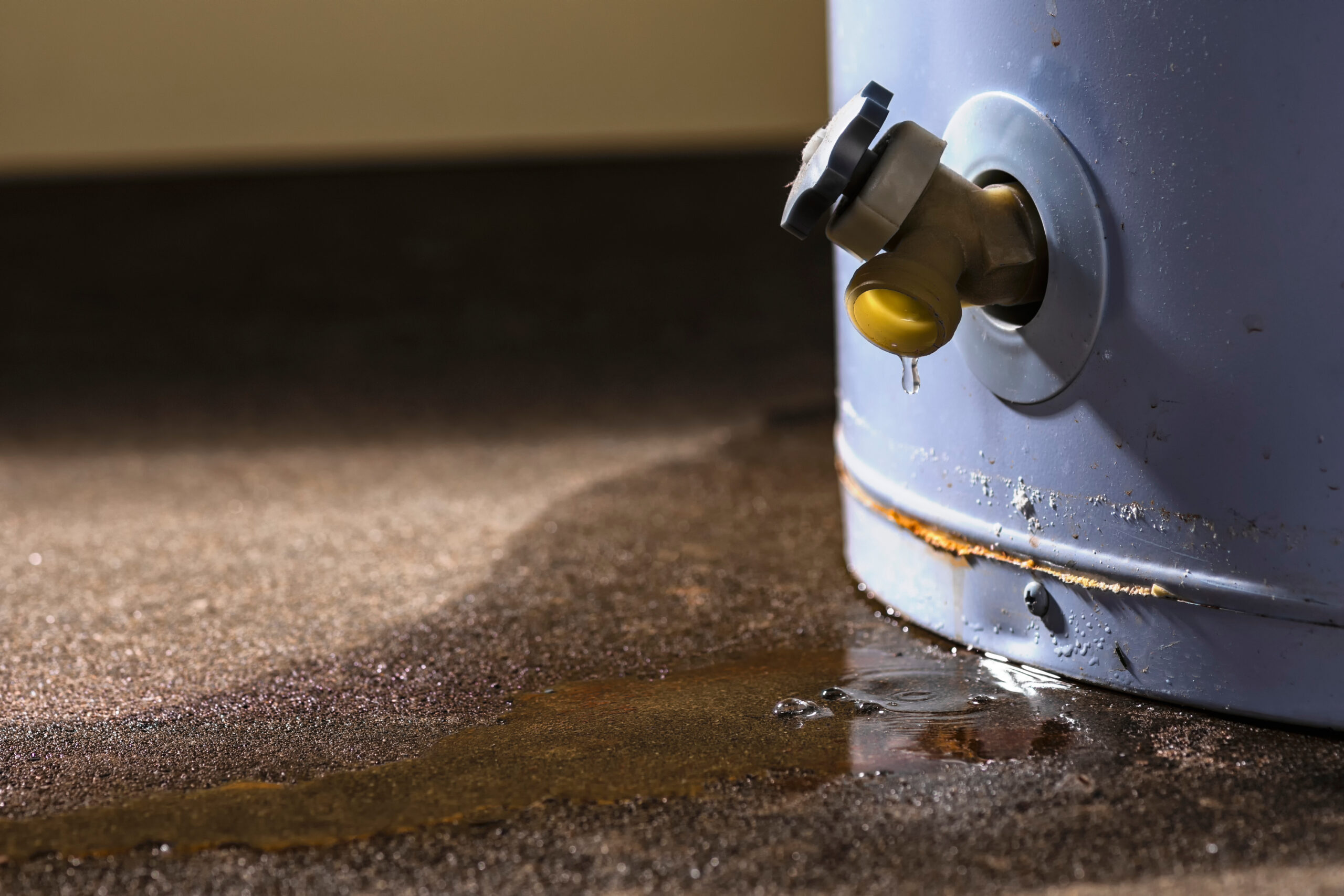
A water heater leaking from the bottom is a serious warning sign that shouldn’t be ignored, as it can quickly lead to water damage, system failure, and costly repairs if not addressed immediately.
Noticing water pooling around your water heater can be alarming, especially when the source isn’t immediately clear. Many homeowners assume the tank itself has failed, but leaks from the bottom can come from several different components. Some causes are minor and repairable, while others indicate it’s time for a full water heater replacement. Knowing the difference can help you act quickly and protect your home from unnecessary damage.
For homeowners in Fort Worth, Aledo, Weatherford, and surrounding areas, water heater issues often appear suddenly—but they usually start with small warning signs that build over time.
When water appears at the base of your unit, it doesn’t always mean the tank is cracked. In many cases, the leak originates from a component above and simply runs down to the bottom, making it look worse than it is.
One common cause is a loose or leaking drain valve. Located near the bottom of the tank, this valve is used to flush sediment from the system. Over time, it can loosen, wear out, or develop small leaks that allow water to escape.
Another possibility is a faulty temperature and pressure relief (T&P) valve. This safety device releases water when pressure inside the tank becomes too high. If it malfunctions or if your system is building excess pressure, it may discharge water that eventually collects at the base.
In some cases, condensation can also create the appearance of a leak. When cold water enters a hot tank, moisture can form on the outside and drip down. While this is less serious, it’s still important to confirm the source before assuming it’s harmless.
One of the most overlooked causes of a leaking water heater is sediment buildup inside the tank. Over time, minerals from your water supply settle at the bottom of the tank and harden. This layer of sediment creates a barrier between the heating element and the water, causing the system to overheat.
As the tank heats unevenly, the metal expands and contracts, which weakens the structure over time. Eventually, this stress can cause small cracks or fractures in the tank lining. Once that happens, water begins leaking from the bottom—and the damage is usually irreversible.
If your water heater is making popping or rumbling noises, it’s often a sign that sediment buildup is already affecting performance.
If the leak is coming directly from the tank, it’s typically due to internal corrosion. Water heaters are designed with a protective lining, but over time, that lining wears down. Once corrosion begins, it slowly eats through the metal until water escapes.
Signs your tank may be failing include:
Unfortunately, a leaking tank cannot be repaired. When corrosion reaches this stage, replacing the unit is the only reliable solution.
The age of your system plays a major role in determining whether repair or replacement is the best option. Most traditional tank water heaters last between 8 and 12 years. If your unit is approaching this range, a leak from the bottom is often a sign that it’s nearing the end of its lifespan.
Older units are more likely to experience:
Continuing to repair an aging water heater can become costly and unreliable. In many cases, replacing the system provides better long-term value and peace of mind.
If you notice water around your heater, taking immediate action can prevent further damage. The first step is to turn off the water supply to the unit. This stops additional water from entering the tank and worsening the leak.
Next, shut off the power source—either electricity or gas—to prevent the system from continuing to heat. This reduces pressure and lowers the risk of further damage.
After that, it’s important to have the unit inspected by a professional. Identifying whether the issue is a valve, connection, or the tank itself determines the next steps.
A water heater leaking from the bottom is not something to ignore. While some causes can be repaired, others signal the need for a full replacement before a major failure occurs. Acting quickly helps prevent flooding, protects your home, and restores reliable hot water.
At S.W.A.T. Plumbing LLC, we help homeowners across Fort Worth, Aledo, Weatherford, and surrounding areas diagnose and resolve water heater problems with fast, dependable service. Whether your unit needs a simple repair or a full replacement, our team will provide clear answers and lasting solutions.
If you notice water pooling around your heater, it’s time to have it inspected before the problem gets worse and leads to more serious damage.




© 2026 S.W.A.T. Plumbing LLC All rights reserved. Designed by Nickel SEO. | Privacy Policy